COVID-19 Displacement
Abstract
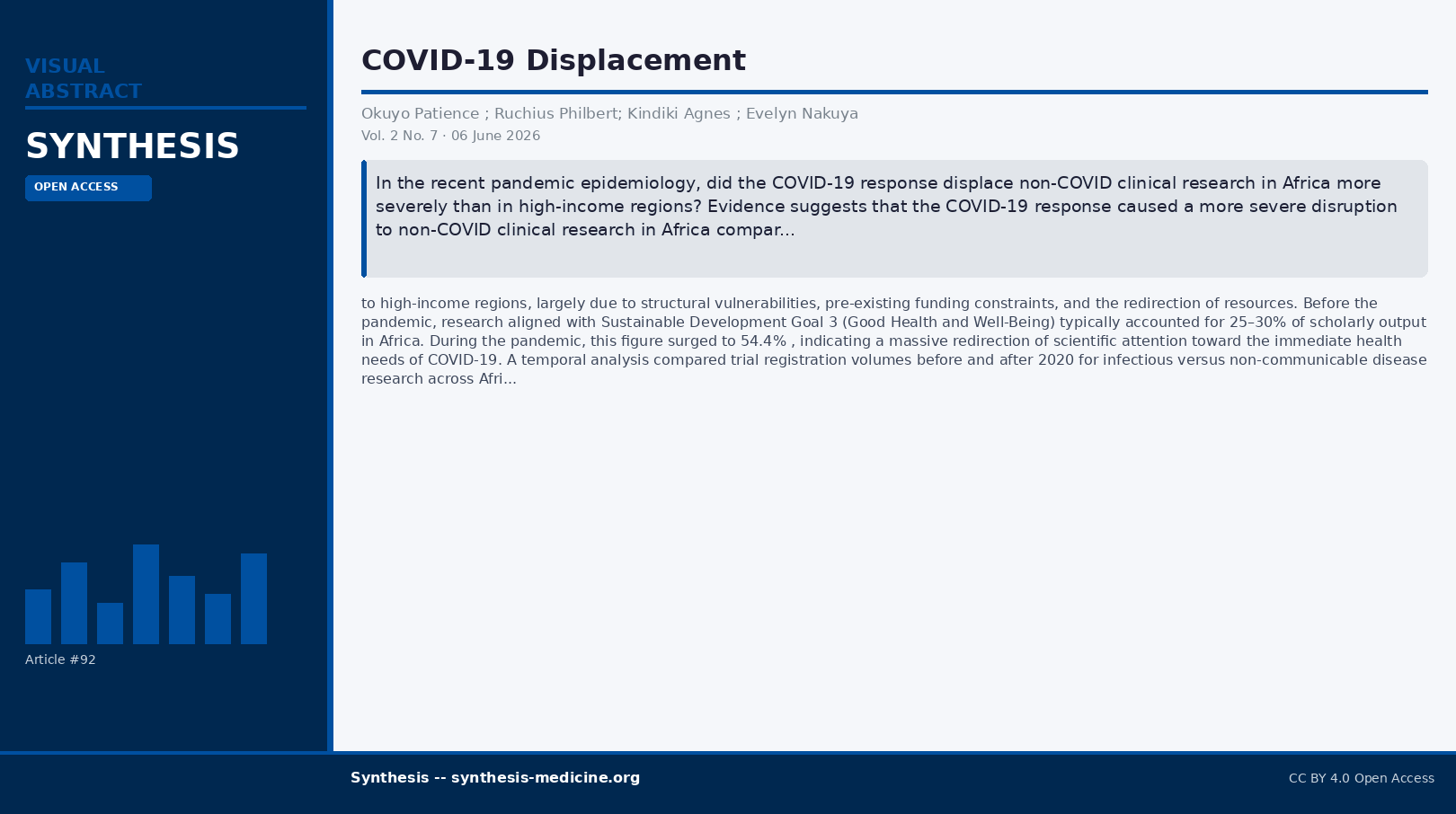
In the recent pandemic epidemiology, did the COVID-19 response displace non-COVID clinical research in Africa more severely than in high-income regions? Evidence suggests that the COVID-19 response caused a more severe disruption to non-COVID clinical research in Africa compared to high-income regions, largely due to structural vulnerabilities, pre-existing funding constraints, and the redirection of resources.
Before the pandemic, research aligned with Sustainable Development Goal 3 (Good Health and Well-Being) typically accounted for 25–30% of scholarly output in Africa. During the pandemic, this figure surged to 54.4%, indicating a massive redirection of scientific attention toward the immediate health needs of COVID-19.
A temporal analysis compared trial registration volumes before and after 2020 for infectious versus non-communicable disease research across Africa (23,873 total trials) and the United States (190,644) using ClinicalTrials.gov epoch data. Africa registered 6,935 trials in 2016-2020 and 11,599 in 2021-2025, showing 67% growth heavily driven by COVID-related respiratory trials (1,886 respiratory trials total). Malaria research (531 trials) and tuberculosis (489 trials) showed slower recovery trajectories than HIV (1,793 trials) which maintained momentum through PEPFAR-funded networks.
While research was disrupted globally, the impact in Africa was compounded by the redirection of staff and resources to COVID-19 management, leading to significant delays in studies related to non-communicable diseases and other endemic infectious diseases.
Unlike in high-income countries where trial volumes recovered rapidly, Africa's non-COVID pipeline recovery was slowed by reallocation of limited research infrastructure. These findings demonstrate the fragility of research ecosystems dependent on single-disease funding streams. This interpretation is limited by the inability to separate COVID-specific trials from general respiratory trial registrations.
Published
Versions
- 2026-06-16 (2)
- 2026-06-06 (1)
Issue
Section
License
Copyright (c) 2026 OKUYO PATIENCE, Ruchius Philbert, Kindiki Agnes, Evelyn Nakuya

This work is licensed under a Creative Commons Attribution 4.0 International License.
Articles in Synthesis are published under the Creative Commons Attribution 4.0 International (CC BY 4.0) licence. Authors retain copyright.